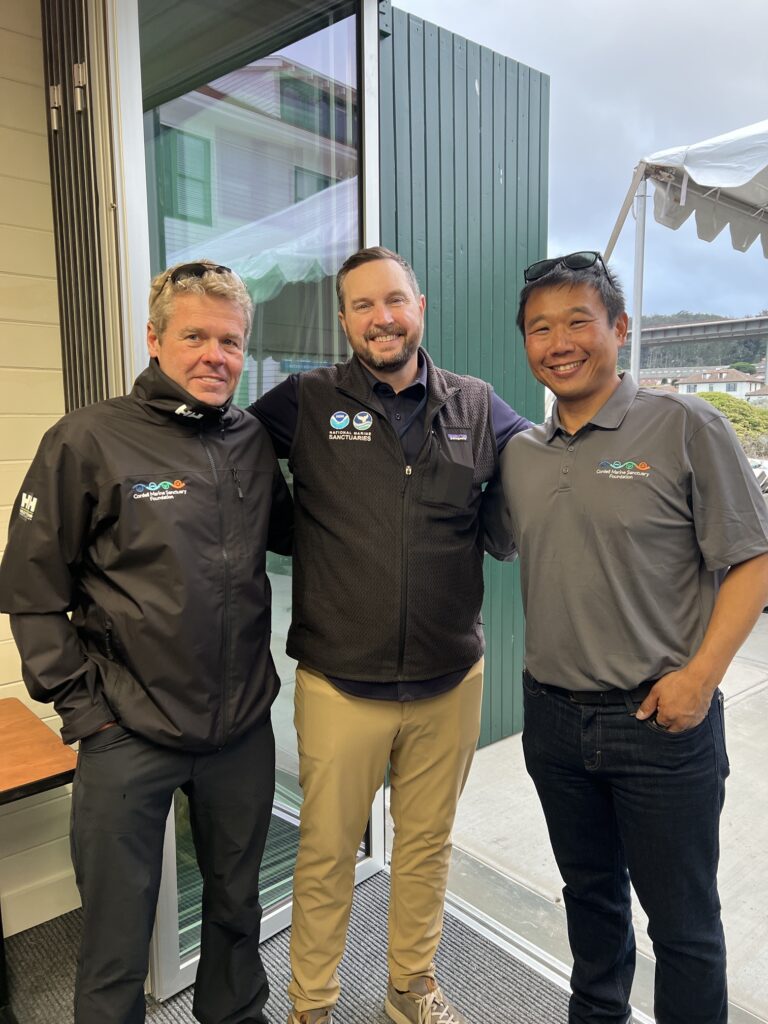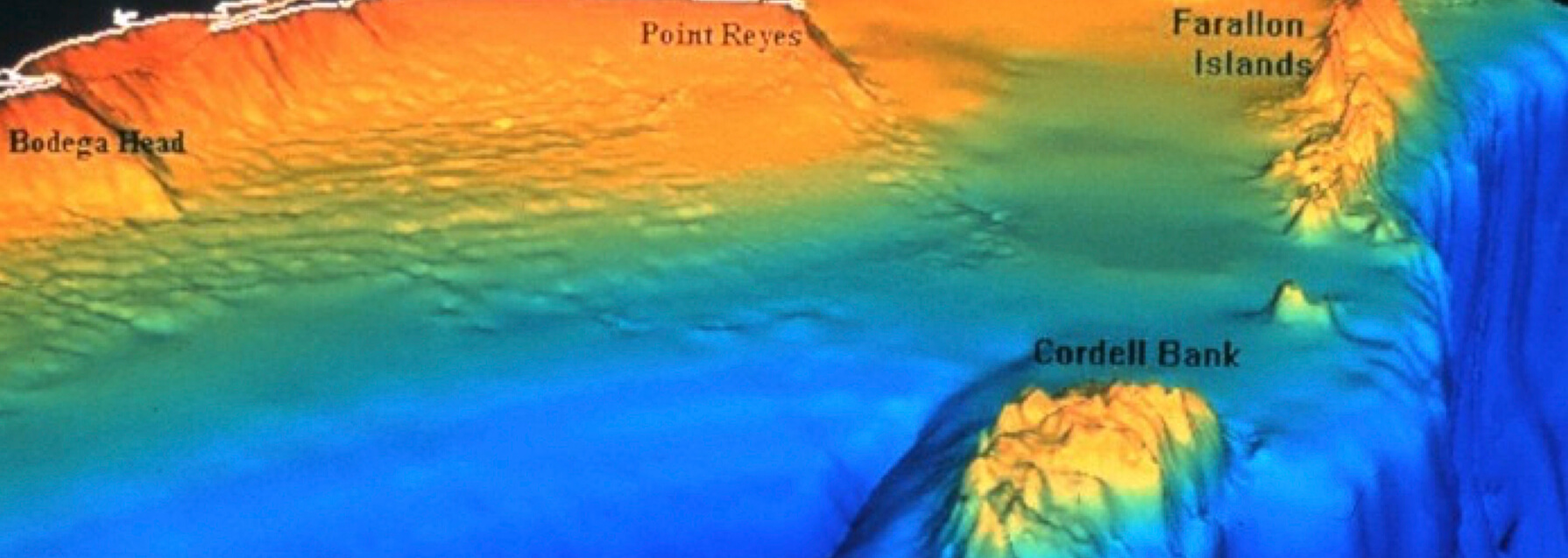
With support from the Cordell Marine Sanctuary Foundation (CMSF), scientists from Greater Farallones and Cordell Bank National Marine Sanctuaries (CBNMS/GFNMS), in partnership with UC Davis Bodega Marine Laboratory (BML), are maintaining long-term oceanographic monitoring at Cordell Bank to track hypoxic conditions and other physical changes. CMSF has been supporting the project from its inception in 2014, with mooring servicing typically occurring at approximately four-month intervals. Hypoxic conditions can impose physiological stress on marine organisms, reducing survival and reproductive success. Cordell Bank supports a diverse biological community, including invertebrates and rockfish that may be particularly vulnerable to low-oxygen events. Data from previous years indicate substantial intra- and inter-annual variability, with episodic low-oxygen conditions occurring for short durations.
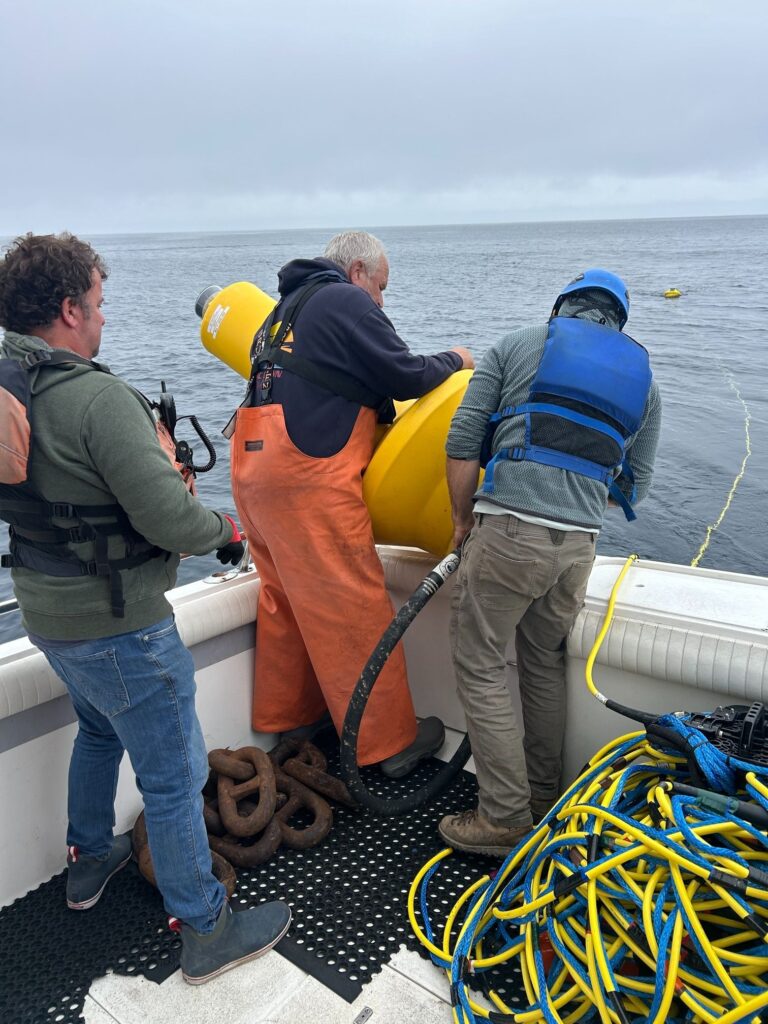
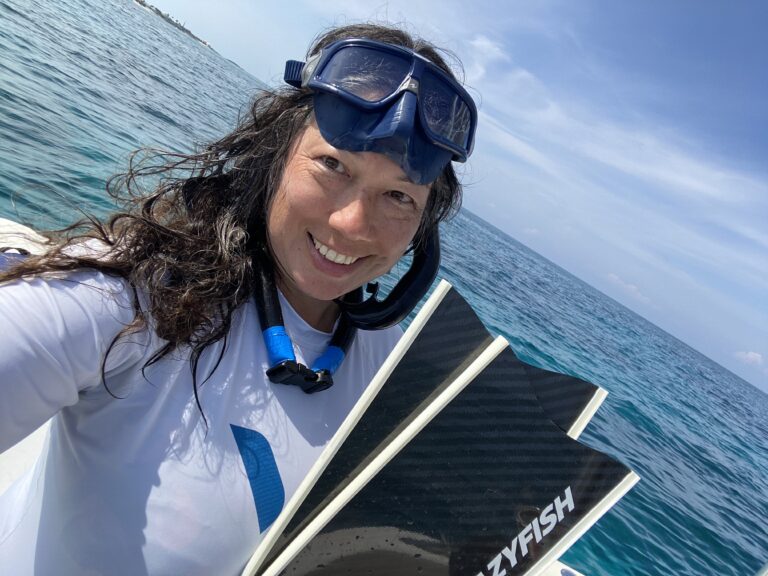
Most recently, the team from GFNMS/CBNMS and BML successfully serviced the Cordell Bank hypoxia-monitoring mooring and deployed a new mooring on June 16, 2026, aboard the M/V Shauna Lee. The team recovered and replaced the 80m depth mooring which had continuously measured and archived dissolved oxygen, temperature, and salinity at depth and, through a surface smart buoy from Blue Ocean Gear, transmitted real time surface data on sea surface temperature, wave height, and location. On this trip, a camera was added to the mooring to test the ability to capture fish images at depth, in partnership with Océane Boulais from Scripps Institution of Oceanography, UC San Diego.
The team also deployed a second mooring from Sofar Ocean at 114 meters on Cordell Bank. This marks the first deployment of a real-time deep-water monitoring system on the Bank that transmits water column data on temperature, salinity, and dissolved oxygen, as well as surface conditions including waves, wind, current, and temperature. A new collaboration with Sofar Ocean provided access to this new mooring and allowed the company to test it at an offshore location.
CMSF is also providing funding to support an analysis of the long-term dataset, a project that is currently underway. The project will include an analysis of the time series, distribution of values, identification of hypoxic events, exploration of correlations, and reports and presentations, to ensure GFNMS/CBNMS have the information about conditions at Cordell Bank to inform effective management and conservation.
Sanctuary staff and BML will continue to monitor environmental conditions to assess trends and potential impacts on marine life at Cordell Bank.
Servicing Hypoxia Monitoring Moorings at Cordell Bank