Photo: Robert Lee
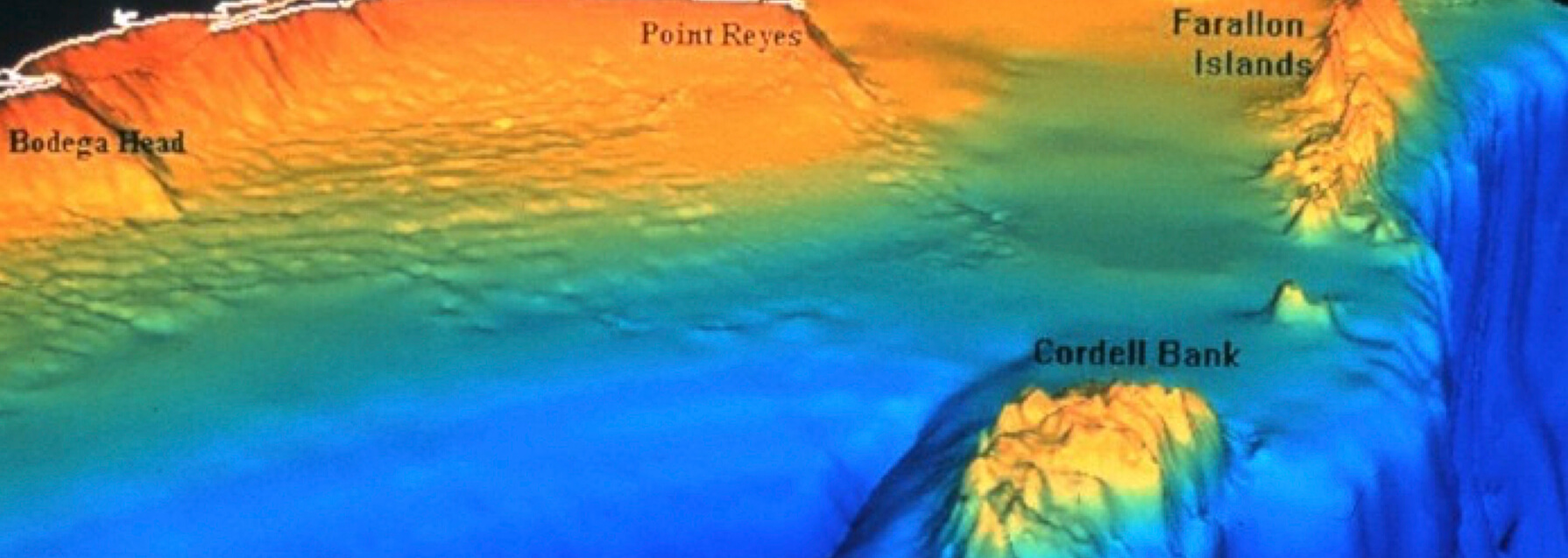
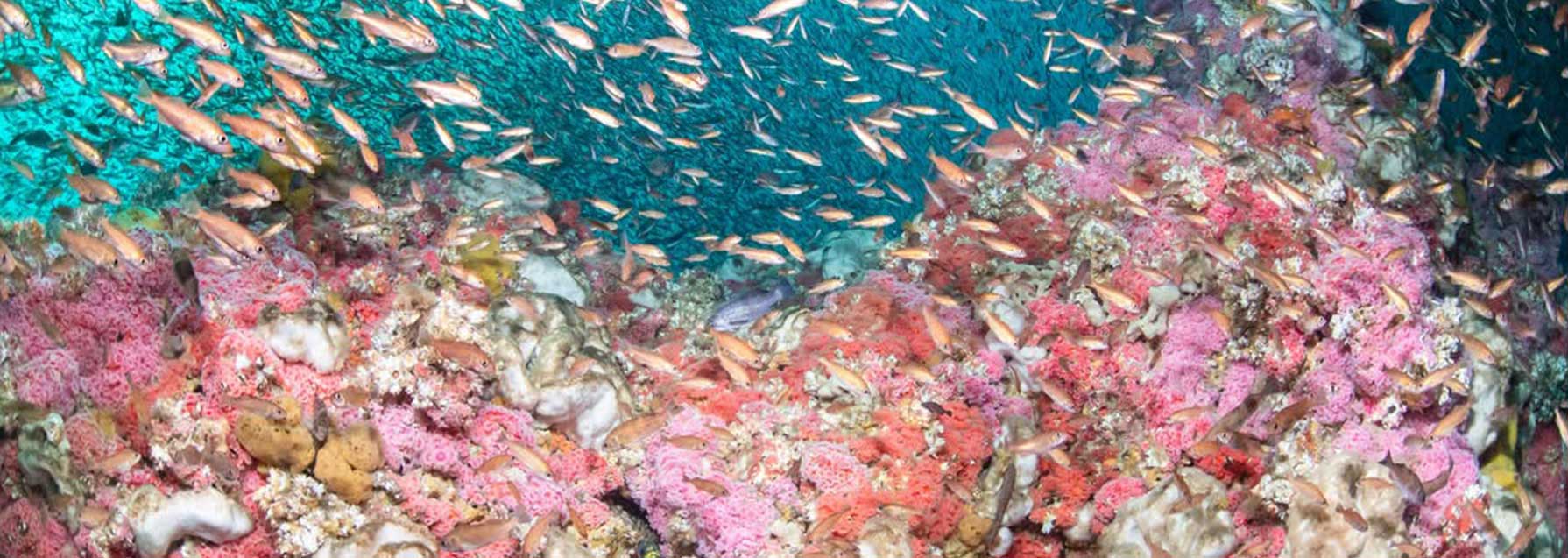
The centerpiece of Cordell Bank National Marine Sanctuary (CBNMS) is an expansive underwater granite bank located on a peninsula of the continental shelf, which geologically originated from the southern Sierra Nevada mountain range. Its hard surface is ideal for invertebrate larvae looking for a place to settle. Snails, seapstars, and crabs live among the dense matrix of other invertebrates like anemones, sponges, and corals that blanket the bank. Jutting out from the seafloor, upwelled water provides nutrients and its upper limits reach the euphotic zone where light is available enough for photosynthesis to occur. The topography of the bank yields a stratified array of life that changes with depth and is engulfed in schools of rockfish.
The sanctuary habitat surrounding the bank includes sandy continental shelf habitat, muddy and rocky continental slope habitat, and submarine canyons. The soft sediment habitats are also teeming with life that prefers soft bottom habitats like clams, worms, seastars, flatfishes, and skates. Rocky outcrops on the slope and in canyons are home to deep sea corals and sponges, as well as other invertebrates and fish.
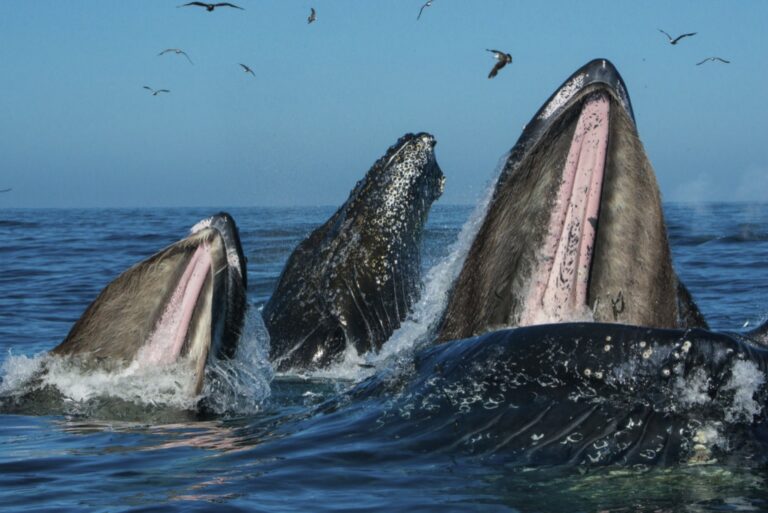
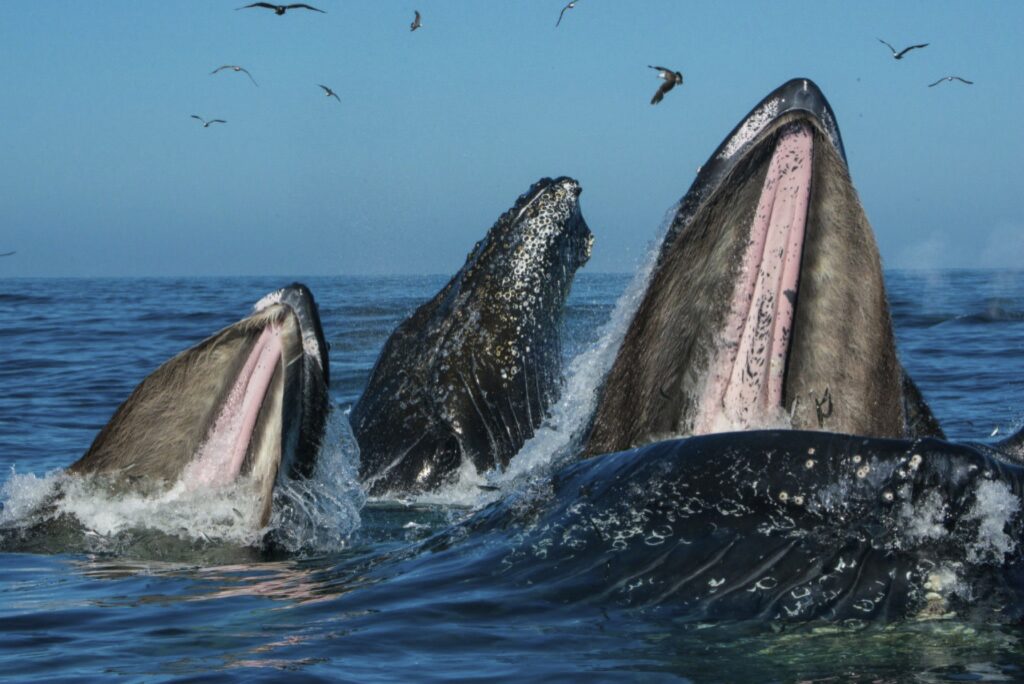
From the surface you would not be able to see Cordell Bank, because its highest point is at a depth of about 115 feet underwater. However, at the surface, other signs of marine life are present. . Humpback, blue, and fin whales feed on krill and fish in the productive waters of CBNMS during their annual migrations. In addition to migratory species, resident species of dolphins, seals, and sea lions frequent the sanctuary more regularly throughout the year to feed. CBNMS also supports more than 75 species of seabirds, which can be seen resting at the surface or diving for fish and pelagic invertebrates. Similarly, ocean sunfish and leatherback sea turtles feast on gelatinous pelagic invertebrates including jellyfish and ctenophores within the sanctuary’s waters.
The Cordell Marine Sanctuary Foundation (CMSF) is committed to protecting the sanctuary’s oceanographic and ecological characteristics, which drive its high productivity and thus, biodiversity.