
Wind is the primary driving force of water movement in the open ocean. In the northern Pacific ocean, wind pushes water clockwise creating a gyre (or rotation of ocean currents) due to global wind patterns, the Earth’s rotation, and continent landmasses acting as physical boundaries. The continuous clockwise movement of water within the ocean basin creates an eastern boundary current along the coast of North America. This continuous clockwise movement creates a steady movement of water southward down the coast of California, called the California current, which is part of the Pacific eastern boundary current.
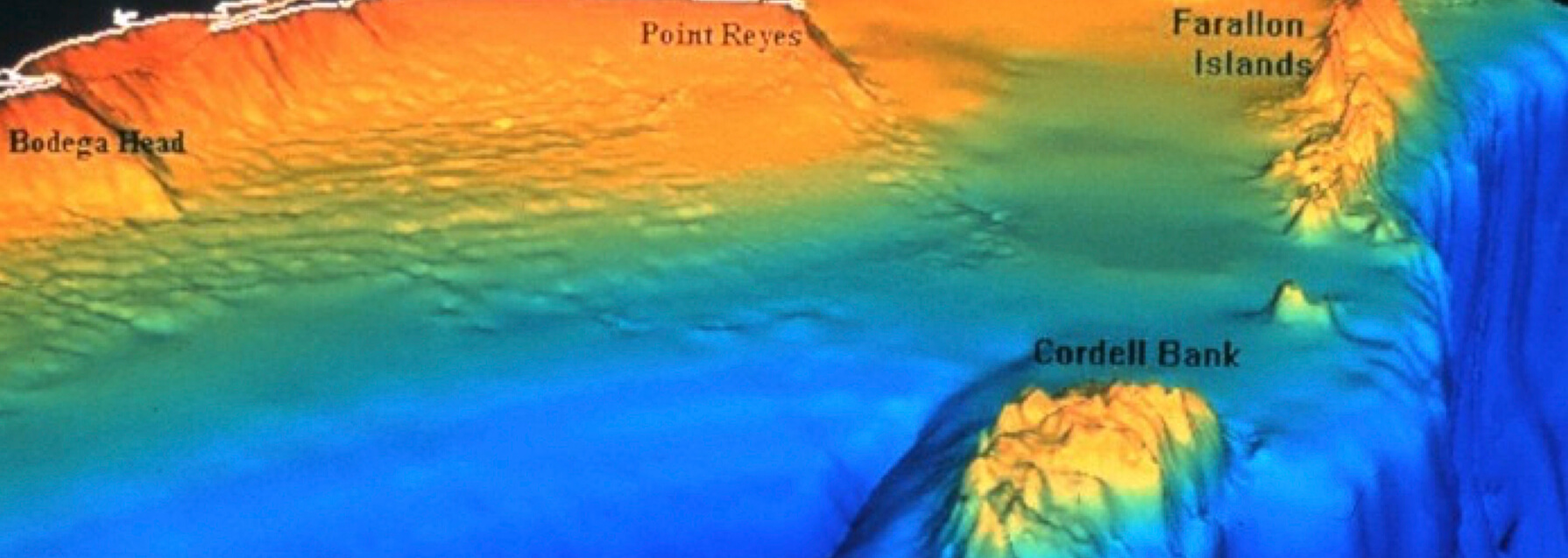
In the spring and early summer, strong winds from the north, coupled with the Earth’s rotation, push water from the California current away from the coast. As warmer surface waters move away from the coast, deeper water moves up the water column to replace it. This movement of colder, nutrient-rich water from a deeper part of the ocean to replace displaced warmer surface water is called upwelling. Just south of Point Arena, a major upwelling locale, the Cordell Bank National Marine Sanctuary (CBNMS) benefits from this nutrient rich water.